Drain Cleaning in New Orleans, LA
Flat ground, a high water table, and a food-loving city make New Orleans drains clog more — and faster — than most. Get the right method for your clog from a licensed, independent local pro.
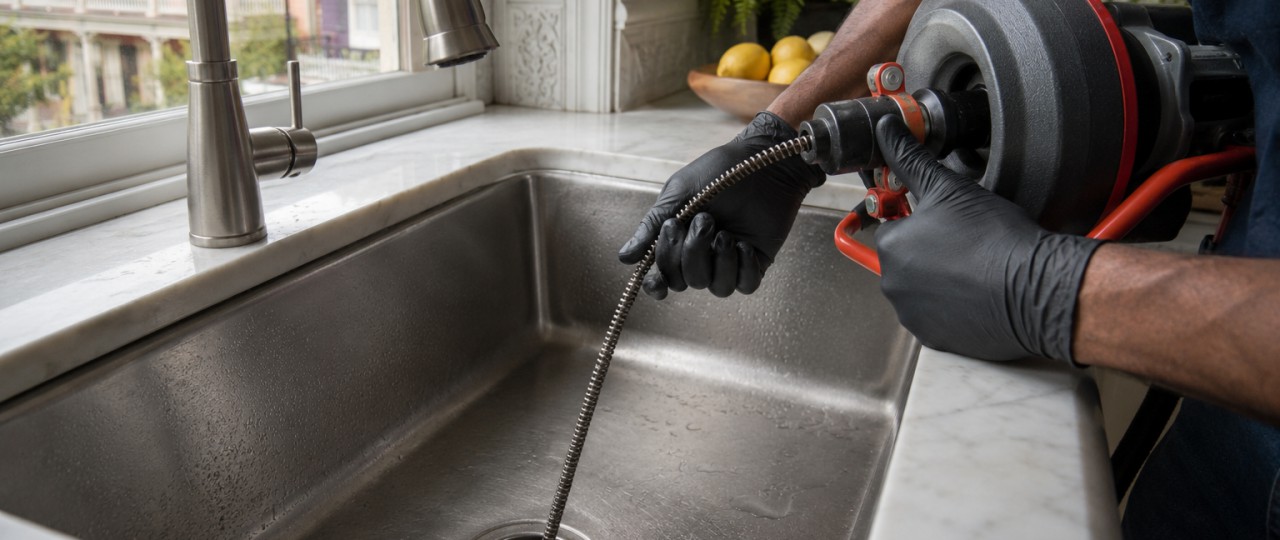
Drain cleaning is the everyday work of keeping water moving the way it should — out of your sinks, tubs, toilets, and floor drains and away from your home. In New Orleans that’s a harder job than it sounds. Flat ground means drains run with almost no slope, the water table sits high, and a food-loving city sends a lot of grease down its kitchen lines. The result is a city that clogs more, and clogs faster, than most.
The good news is that nearly every drain problem has a right tool and a right method, and a licensed local pro will match the approach to the clog rather than reaching for the same auger every time. The pages below break down the most common drains we get called about, the difference between snaking and jetting, and how to tell a one-off clog from a recurring problem that needs more than a quick clearing.
The two ways drains get cleaned
Almost all professional drain cleaning comes down to two methods, sometimes used together:
- Cabling (snaking / rodding) sends a flexible steel cable down the pipe to break through or pull back a blockage. It’s fast, affordable, and ideal for a localized clog like a hair mass or a solid obstruction.
- Hydro jetting uses high-pressure water to scour the entire inner wall of the pipe, cutting through grease, sludge, scale, and root mats and leaving the line genuinely clean rather than just punched open.
Cabling solves the immediate clog; jetting solves the buildup that causes repeat clogs. Knowing which you need — and when a camera should look first — is most of what separates a lasting fix from a problem that returns in a month.
Drain cleaning, by where it clogs
From a greasy kitchen line to a backed-up floor drain — the most common drains we clear, plus the two methods behind every job.
Kitchen Drain Cleaning
Grease is the number-one kitchen clog in a city that loves to cook. Clearing and jetting greasy kitchen lines.
Learn more →Bathroom & Shower Drains
Hair, soap scum, and slow tubs — the most common household clog, cleared without harsh chemicals.
Learn more →Clogged Toilet
When a plunger won’t do it, the blockage may be past the bowl. Clearing toilet and closet-bend clogs.
Learn more →Floor Drain Cleaning
The lowest drains in the house — and the first to back up. Clearing garage, laundry, and basement floor drains.
Learn more →Hydro Jetting
High-pressure cleaning that scours grease, scale, and roots from the full pipe — the deep clean cabling can’t match.
Learn more →Drain Snaking & Rodding
The fast, affordable first response for a localized clog — how cabling works and when it’s the right call.
Learn more →Frequently asked questions
How often should New Orleans drains be cleaned?
For a typical home with no recurring issues, there’s no fixed schedule — you clean a drain when it slows. But homes with old laterals, big trees, or heavy kitchen use often benefit from preventive jetting every year or two, because the local conditions (flat pipes, roots, grease) cause buildup faster than average.
Are chemical drain cleaners a problem?
They’re a poor fit for the older pipes common in New Orleans. The caustic chemicals can damage aging cast iron and clay, they rarely clear a full blockage, and they leave a hazard in the line for whoever services it next. A cable or jetter clears the clog without the collateral damage.
Snaking or jetting — which do I need?
Snaking is the right first move for a single localized clog like a hair mass or a stuck object. Jetting is the answer for grease, sludge, scale, or roots, and for any line that keeps clogging, because it cleans the whole pipe rather than boring a hole through the blockage.
Why does my drain keep clogging in the same spot?
Recurring clogs in one place almost always mean buildup or a defect the cable only temporarily relieves — grease coating the walls, roots at a joint, or a low spot where waste settles. A camera inspection finds the cause, and jetting or a repair fixes it for good.
A drain backing up doesn’t wait. Neither do we.
In a city this far below sea level, a slow drain can become a backup overnight. Get matched with a licensed New Orleans pro for a free assessment — day or night.