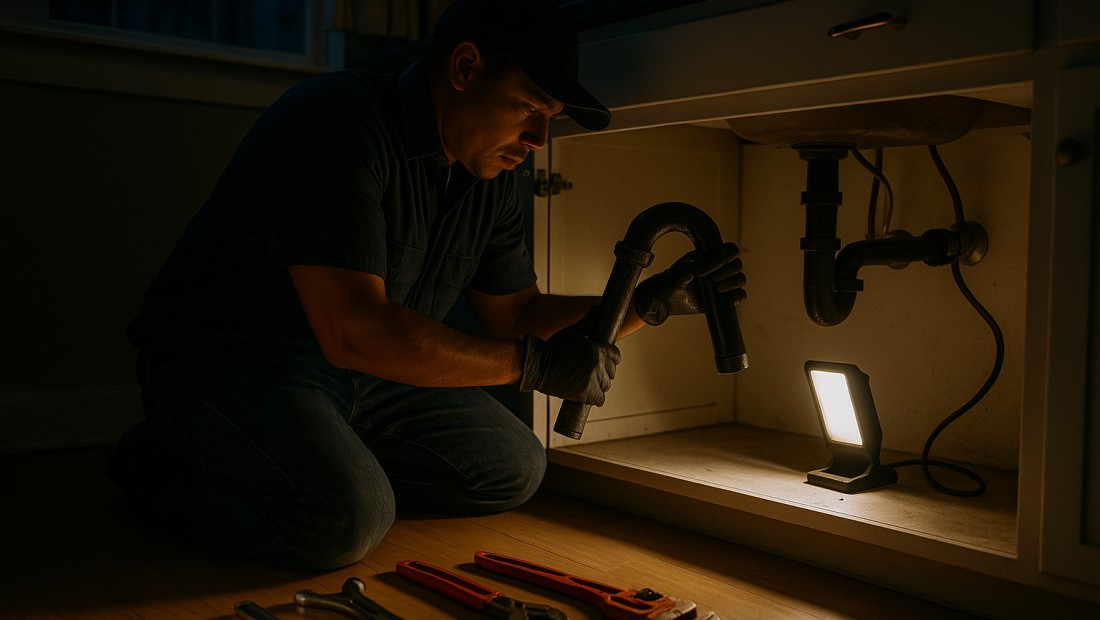
When a drain quits in the middle of the night, “wait until morning” isn’t always an option — especially in New Orleans, where a stalled line backs up fast and the next heavy rain can make everything worse. Emergency drain cleaning gets a licensed pro to your door any hour, identifies whether it’s a single fixture or a main-line problem, and restores flow before the damage spreads.
When a clog becomes an emergency
Most clogs are an annoyance you can schedule around. A few are not. The line between the two usually comes down to one question: can you stop using the affected fixtures and still function until morning? If a single bathroom sink is slow, you can. If a toilet won’t flush and it’s the only one in the house, if a tub is filling with dark water when you run the washing machine, or if every drain on the ground floor is gurgling at once, you’re past the point of waiting.
New Orleans raises the stakes in ways that don’t apply in higher, drier cities. The ground is flat and the water table is high, so building drains run with very little slope and clear sluggishly even when healthy. When one finally blocks, wastewater doesn’t have a deep basement to collect in — it surfaces at the lowest opening in the home. Add the humidity, and water that sits on flooring overnight becomes a mold problem on top of a plumbing one.
What an emergency drain pro does first
A good emergency response is methodical, not frantic. The technician’s first job is to figure out how big the problem is before touching a single cable.
- Stop the inflow. Water to the affected fixtures gets shut off so nothing new is added to a line that can’t drain.
- Locate the blockage. By checking which fixtures work and which don’t, a pro can tell whether the clog is local to one drain or sitting in the main line that serves the whole house.
- Choose the right tool. A local sink or tub clog often clears with a hand auger or small drain machine; a main-line stoppage needs a larger cable or hydro jetting through a cleanout.
- Clear and verify. After cabling or jetting, the tech runs water to confirm the line is actually flowing, not just temporarily relieved.
- Recommend next steps. If the clog points to a deeper issue — roots, a belly, broken pipe — a camera inspection is the logical follow-up once the emergency is over.
Why the New Orleans clock runs faster
Three local realities turn a routine clog into a same-night call. First, the flat terrain means drains here have almost no margin — a partial blockage that would self-clear on a steeper line just sits. Second, the city’s combined and aging infrastructure means heavy rain can surcharge the public system, so a clogged lateral has nowhere to drain even after you’ve cleared the house side. Third, the housing stock is old: cast-iron and clay laterals beneath century-old shotguns and doubles are brittle, scaled, and root-prone, so the same line tends to fail again if it’s only snaked, not cleaned.
What emergency drain cleaning costs in New Orleans
Emergency work is priced higher than a scheduled visit because it pulls a licensed pro out after hours. A straightforward after-hours clog clearing through an accessible cleanout typically runs a few hundred dollars; a main-line stoppage that needs a large cable or jetting costs more, and storm-season surge demand can push rates higher still. The single biggest cost driver is access — a home with a proper exterior cleanout is far quicker (and cheaper) to service than one where the tech has to pull a toilet or work through a roof vent. A reputable pro quotes the emergency rate up front, before any work begins.
When the real fix isn’t the clog
Clearing the blockage solves tonight’s problem. It doesn’t always solve the underlying one. If your line backs up every few months, if you’re pulling roots out of the cable, or if the pipe is original to an old New Orleans home, the emergency clearing is a band-aid. The lasting fix is a camera inspection to see what’s actually happening in the pipe, followed by hydro jetting to scour it clean or a targeted repair where the line is failing. Handle the emergency first; diagnose the cause once everyone can sleep.