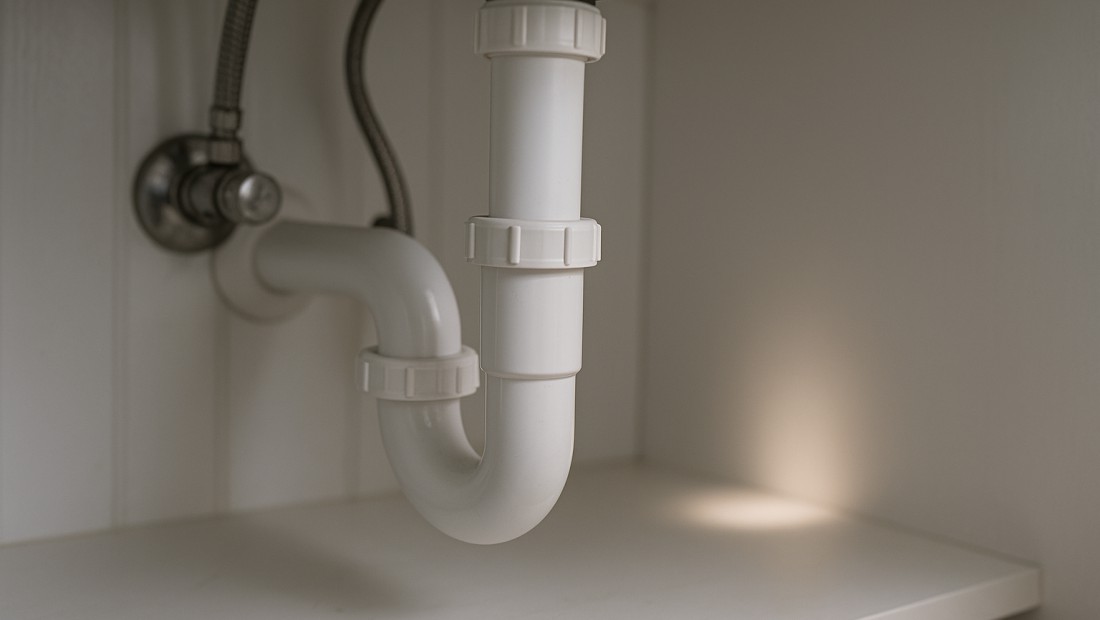
A sewer-gas smell inside the house is unpleasant, sometimes alarming, and almost always fixable once you understand where it’s coming from. That rotten-egg or musty-sewage odor means sewer gas is escaping into living space somewhere it shouldn’t — and in the overwhelming majority of cases, the cause is a simple broken water seal, not a catastrophe. Here’s how to track it down.
How your plumbing keeps sewer gas out
Every drain in your home has a trap — that U-shaped bend under a sink, built into a toilet, or set into a floor drain. The trap holds a small plug of water that physically blocks sewer gas from rising up the pipe and into the room. As long as every trap stays full and the system is properly vented (so gas vents out the roof instead of being pushed indoors), you never smell a thing. A sewer odor means that defense has been breached at one or more points.
The usual causes, most to least common
- A dry trap. The number-one cause. A drain that hasn’t been used in a while — a guest bathroom, a floor drain, a basement sink — lets its trap water evaporate, breaking the seal. New Orleans’ heat and humidity speed evaporation. The fix is as easy as running the fixture or pouring water down the drain.
- A venting problem. If a vent is blocked or inadequate, draining water can siphon traps dry or push gas back indoors. Often paired with gurgling.
- A failed wax ring under a toilet. A toilet that rocks or has a worn seal at the floor lets gas (and sometimes water) escape around its base.
- A cracked or leaking trap or pipe. A damaged trap, a loose cleanout cap, or a cracked drain line under a sink or in a wall releases gas directly.
- A blockage backing up gas. Less common, but a partial main-line blockage can push odor back through the system.
Tracking down the source
- Locate the smell. Is it strongest in one room, near one fixture, around a toilet base, or general throughout? That narrows it immediately.
- Refill every trap. Run all fixtures and floor drains; re-check in a day. Many odors end here.
- Check the toilet. Does it rock? Is the smell strongest at the floor? That’s a wax-ring suspect.
- Look for the obvious. A loose cleanout cap, a visible crack in a trap under a sink, an unsealed drain line from a removed fixture.
- Call a pro for the rest. Venting problems, in-wall cracks, and blockages need someone who can inspect the system — sometimes with a camera or a smoke test that reveals exactly where gas is escaping.
Why New Orleans homes get sewer smells
The climate and the housing stock both play a role. The heat and humidity dry out infrequently-used traps faster than in cooler places, so dry-trap odors are common, especially after a vacation or in a guest bath. The old housing stock has aged cast-iron drains and traps that crack and corrode, and decades of piecemeal renovation leave behind abandoned drain stubs and compromised venting. And in homes that have settled with the subsiding ground, pipes and toilet seals shift, opening small gaps for gas to escape. None of these is unusual, and all are fixable.
Is sewer gas dangerous?
In the low concentrations of a typical household odor, sewer gas is mostly an unpleasant nuisance rather than an acute danger — the smell is detectable far below harmful levels. That said, persistent strong sewer gas shouldn’t be ignored: it can contain hydrogen sulfide and methane, can aggravate headaches and nausea, and in rare, very high concentrations is hazardous. The practical takeaway is to ventilate the area, find and fix the source rather than masking it, and call a pro if the smell is strong, persistent, or you can’t locate it. If you ever smell natural gas (a distinct sulfur/odorant smell) rather than sewer gas, treat that as a separate, urgent safety issue with your gas utility.