Sewer Line Services in New Orleans, LA
The buried lateral that carries everything to the street is the part of your system under the most stress in New Orleans — aged, root-invaded, and bent by shifting ground. Diagnose and fix it with the right tools.
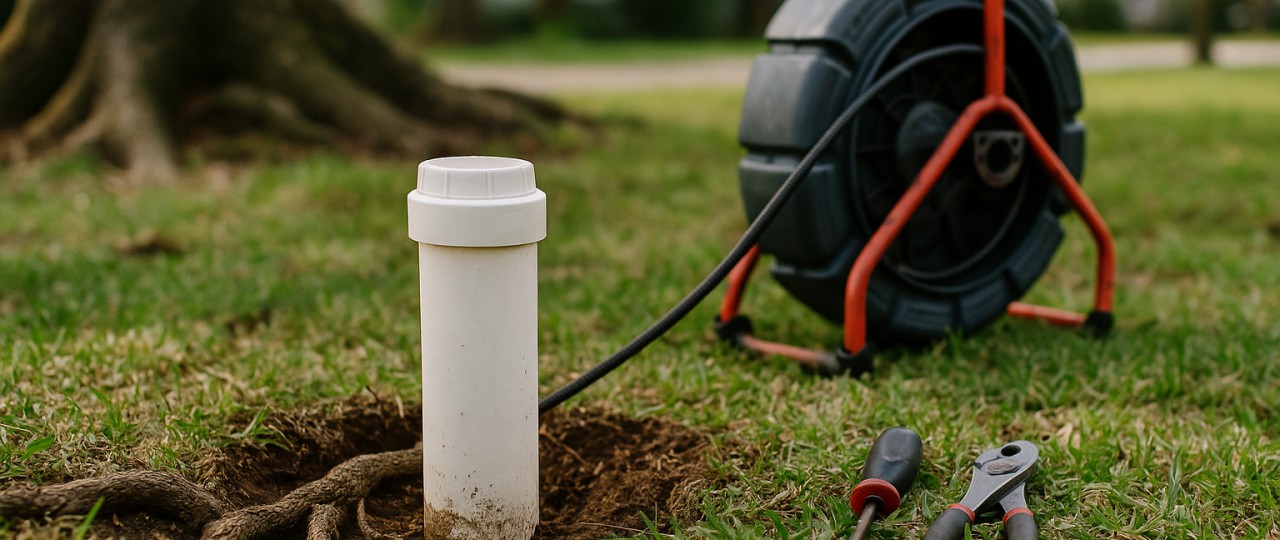
Everything that drains in your home meets at one pipe — the sewer lateral that carries it from the building out to the public main in the street. It’s out of sight, underground, and easy to ignore until it fails, and when it does, the whole house feels it. In New Orleans, the sewer lateral is also the part of the system under the most stress: brittle with age, invaded by roots, and bent by ground that never stops settling.
Sewer-line work is a step beyond drain cleaning. A clog you clear; a sewer line you diagnose, clean, and sometimes repair. The pages below walk through the tools and methods that make modern sewer work less destructive than it used to be — camera inspection to see inside the pipe, hydro jetting and root cutting to clean it, and trenchless techniques that can repair or replace a line without digging up your whole yard.
Why New Orleans is hard on sewer laterals
- Age. Much of the city’s housing predates modern PVC. Laterals are often vitrified clay, cast iron, or — in some mid-century homes — Orangeburg, a tar-paper pipe that fails predictably with age.
- Roots. The live oaks and other mature trees that define New Orleans’ streets send roots into the joints of old laterals, where they grow into clogging masses.
- Subsidence. The ground here is sinking and settling unevenly, which bends and offsets buried pipe, creating low spots (“bellies”) where waste collects.
- Water table. A high water table means groundwater infiltrates any crack or bad joint, and saturated soil shifts pipe more easily.
Sewer-line services, start to finish
From seeing inside the pipe to cleaning, root removal, and trenchless repair — the full path from diagnosis to fix.
Sewer Camera Inspection
A video look inside the line — the single most useful diagnostic there is. See roots, bellies, cracks, and breaks before you spend a dollar on a fix.
Learn more →Sewer Line Cleaning
Jetting and rodding to clear and clean the lateral that carries everything from your home to the street.
Learn more →Tree Root Removal
The number-one sewer enemy in a city of live oaks. Cutting, jetting, and stopping roots from reclaiming the line.
Learn more →Trenchless Sewer Repair
Repair or reline a failing sewer pipe with little or no digging — a major advantage for historic New Orleans lots.
Learn more →Sewer Line Replacement
When a lateral is beyond repair, what full and trenchless replacement involve — and when each makes sense.
Learn more →Frequently asked questions
How do I know if my problem is the sewer line and not just a drain?
If clearing individual drains doesn’t hold, if more than one fixture backs up at once, if you have recurring whole-house backups, or if you smell sewer outdoors near the line, the issue is likely the lateral itself. A camera inspection confirms it by showing exactly what’s happening inside the pipe.
What is my sewer lateral made of?
It depends on the home’s age. Early-twentieth-century New Orleans homes often have vitrified clay or cast iron; some mid-century homes have Orangeburg (a bituminized fiber pipe known to fail); newer construction uses PVC. A camera inspection identifies the material and its condition.
Can a sewer line be fixed without digging up my yard?
Often, yes. Trenchless methods — pipe lining and pipe bursting — repair or replace a lateral through one or two small access points instead of an open trench. They’re especially valuable on tight historic New Orleans lots with mature trees, courtyards, and hardscape worth preserving.
How long do sewer lines last?
It varies widely by material and conditions. Clay and cast iron can last many decades but become brittle and root-prone with age; Orangeburg often fails within 30–50 years. New Orleans’ shifting ground and roots shorten the practical lifespan of any line, which is why periodic inspection matters here more than most places.
A drain backing up doesn’t wait. Neither do we.
In a city this far below sea level, a slow drain can become a backup overnight. Get matched with a licensed New Orleans pro for a free assessment — day or night.