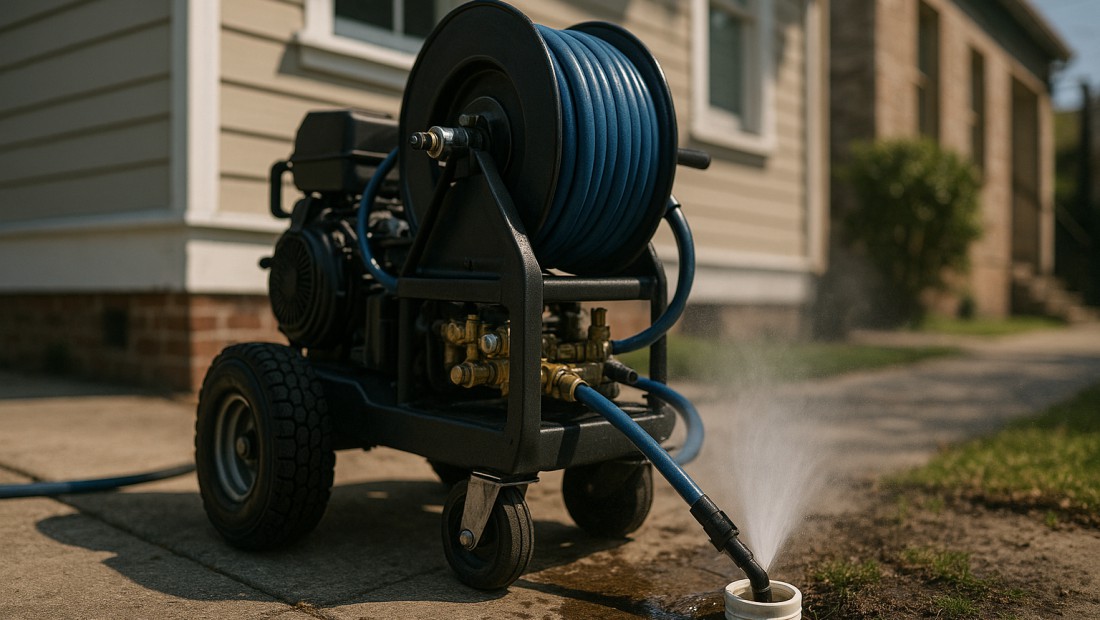
Hydro jetting is the deepest clean a drain or sewer line can get. Instead of boring a hole through a clog the way a cable does, a jetter blasts the entire inside of the pipe with high-pressure water, stripping away grease, sludge, scale, and root hair until the line is back to its full diameter. For the grease- and root-heavy pipes of New Orleans, it’s often the difference between clearing a clog and actually solving it.
How hydro jetting works
A jetter pushes water through a specialized nozzle at very high pressure — thousands of pounds per square inch. The nozzle has jets angled forward to cut through the blockage and jets angled backward that both propel the hose down the line and scour the pipe walls as it travels. The forward jets break up the obstruction; the rear jets blast the loosened debris back toward the cleanout, where it flushes out. The result isn’t a channel punched through the gunk — it’s a pipe scrubbed clean wall to wall.
What jetting clears that cabling can’t
- Grease and fat, the New Orleans kitchen-line classic — jetting emulsifies and flushes it instead of poking through it.
- Sludge and sediment that settles in flat-running and bellied pipes and slowly chokes the line.
- Scale buildup on the rough interior of old cast-iron pipe.
- Root hair and fine root mats — jetting can cut and flush the fine roots that recolonize a line between cablings (heavier roots may need a cutting head first).
- Mineral and soap scale in long-neglected drains.
When jetting is the right call — and when it isn’t
Jetting shines for grease, sludge, scale, recurring clogs, and routine preventive cleaning of lines that build up fast. It’s also the right tool before a sewer line is relined or a restaurant’s grease-heavy line is brought back to spec. It is not always the right first move: a pipe that’s already cracked, badly corroded, or collapsing can be damaged by high pressure, so a responsible pro inspects the line — ideally with a camera — before jetting an old or suspect pipe. In New Orleans, where laterals can be a century old, that camera-first habit matters.
Why New Orleans lines benefit from jetting
The local conditions that cause clogs are exactly the ones jetting handles best. The city’s flat terrain means pipes carry waste slowly and let sediment settle. Its food culture loads kitchen lines with grease. Its mature trees push roots into sewer joints. And its aging cast-iron and clay pipes scale and roughen on the inside. Cabling can punch through any of these, but it leaves the underlying buildup in place. Jetting removes it, which is why so many New Orleans homes that clog “every few months” with cabling go years between problems once the line is jetted clean.
What hydro jetting costs
Jetting costs more than a simple cabling because it uses specialized equipment and takes more time, but it does proportionally more and lasts far longer. For a one-time isolated clog, cabling is the economical choice. For a greasy kitchen line, a root-prone lateral, a chronically slow main, or a restaurant’s grease line, jetting is usually the better value over time — you’re buying years of clear flow rather than weeks. Price depends on the length and diameter of the line, the severity of the buildup, and access; a home with a good cleanout is quicker and cheaper to jet.
Pairing jetting with a camera
The best results come from using a camera and a jetter together. A camera inspection before jetting confirms the pipe is sound enough to take the pressure and shows what’s in there. A second look after jetting verifies the line is genuinely clean and reveals any cracks, bellies, or root entry points that were hidden under the buildup. For an older New Orleans lateral, that before-and-after view turns a cleaning into a real diagnosis of the line’s health.