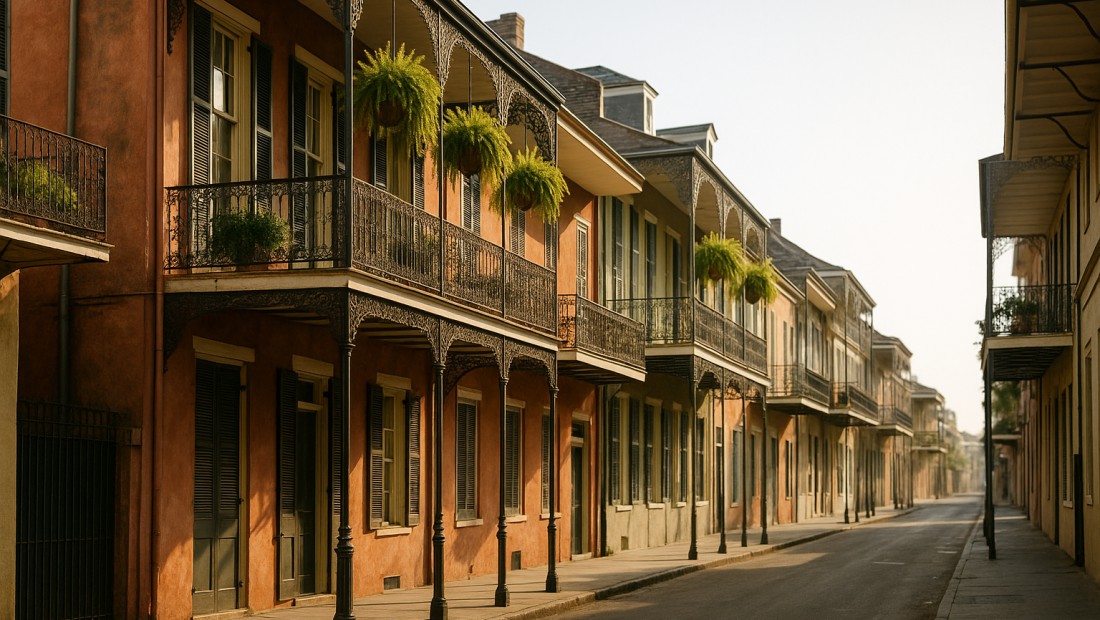
The French Quarter is the most distinctive plumbing environment in New Orleans, and arguably in the country. These are buildings that have stood for two and three centuries, retrofitted for modern plumbing long after they were built, sharing courtyards and party walls and a drainage layout that grew organically over generations. Clearing a drain here is rarely as simple as it looks from the banquette.
What’s under a Quarter building
The drain and sewer lines beneath French Quarter buildings are typically the oldest in the city — vitrified clay and cast iron, much of it well past the lifespan those materials were designed for. Cast iron corrodes from the inside, leaving a rough, scaled interior that grabs grease and debris; clay joints loosen and crack, inviting roots and groundwater. Many lines were laid before there were codes governing slope and venting, and have been spliced into repeatedly as kitchens and bathrooms were added, moved, and modernized. The result is a network that clogs readily and benefits enormously from a camera inspection before anyone guesses at a fix.
Courtyards, shared lines, and tight access
Much of what makes the Quarter charming makes drain work challenging. Buildings share courtyards, and sometimes drainage; a backup in one unit can originate in a line serving several. Access is tight — no sprawling side yards to reach a cleanout, often no obvious cleanout at all in the oldest buildings. Slate and brick courtyards and the historic district’s strict preservation rules make open excavation a genuine last resort, which is exactly why trenchless methods and accurate camera locating are so valuable here: they let a pro diagnose and often repair a line through minimal access, preserving the surfaces above.
Restaurants, grease, and the working Quarter
The French Quarter is also a working hospitality district, and where there are kitchens there is grease. Restaurant and bar drain lines here take a heavy grease load on flat-running old pipe, a combination that demands real cleaning rather than a quick cable. Hydro jetting — on lines confirmed sound enough to take it — is the method that actually keeps a commercial Quarter line flowing, and many establishments benefit from a scheduled jetting program rather than waiting for the inevitable backup mid-service.
Common Quarter calls
- Grease-clogged kitchen and bar lines in residences and restaurants alike.
- Slow, scaled drains in old cast iron that’s narrowed over decades.
- Shared-line backups where multiple units feed a common drain.
- Sewer odor from dry traps in seasonally-used properties and rentals.
- Root and groundwater intrusion at failing clay joints below the water table.
Whether you own a Royal Street residence, manage a Decatur Street kitchen, or run a short-term rental off Esplanade, the independent local pros in our network understand French Quarter buildings and their plumbing. We’ll connect you with someone who can clear the immediate problem and, when the line is old enough to warrant it, look inside before recommending anything bigger.