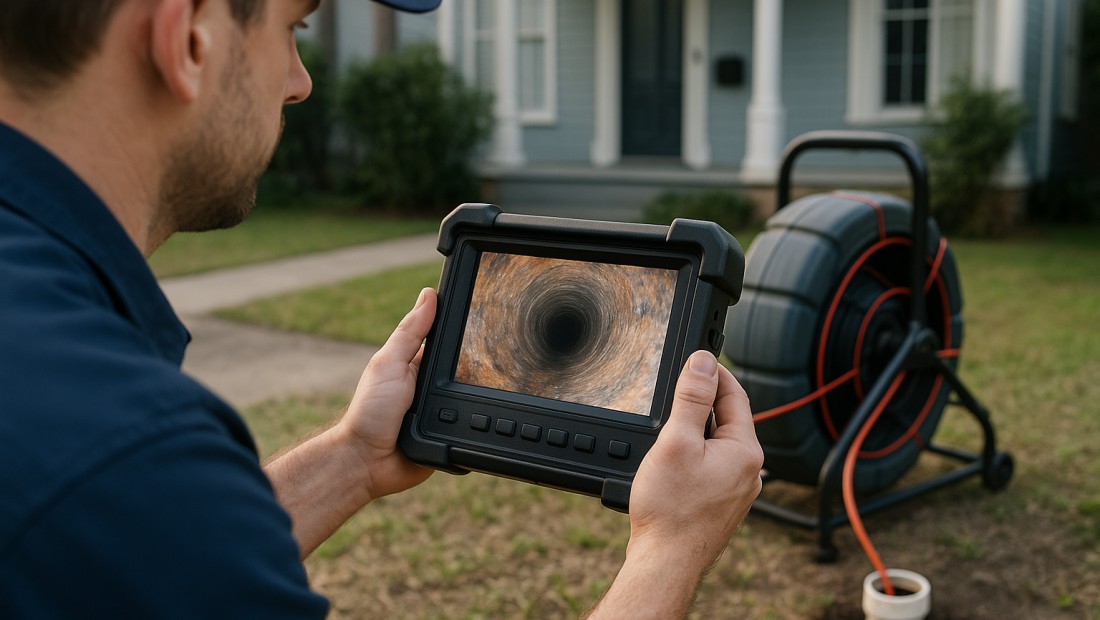
A sewer camera inspection is the most useful thing you can do before spending money on a sewer problem. Instead of guessing what’s wrong with a buried pipe, a pro feeds a waterproof video camera down the line and watches, in real time, exactly what’s happening inside — the roots, the cracks, the bellies, the breaks. In New Orleans, where laterals are old and the ground keeps moving, that look inside is the difference between a targeted fix and an expensive guess.
What a camera inspection shows
The camera travels the full length of the lateral, usually entering through a cleanout, sending back a live picture of the pipe’s interior. A skilled technician reads that footage for the things that cause backups and that decide what repair, if any, makes sense:
- Root intrusion — where roots have entered a joint and how badly they’ve colonized the line.
- Bellies — low spots where settling ground has sagged the pipe and waste collects.
- Cracks, holes, and offset joints — the structural defects that let groundwater in and cause repeat clogs.
- Pipe material and condition — whether you have clay, cast iron, Orangeburg, or PVC, and how much life is left.
- Grease and scale buildup — how much the interior has narrowed.
- Collapses and separations — a line that has failed structurally and needs repair, not cleaning.
Why it matters so much in New Orleans
In a city with newer pipes and stable ground, you might never need to see inside your sewer line. New Orleans is the opposite case. The laterals are old enough that material failure is common; the live oaks guarantee root pressure; and the constant subsidence means even a sound pipe can develop a belly over time. A camera turns all of that from speculation into fact. Rather than cabling the same line over and over and wondering why it keeps clogging, you see the offset joint or the bellied section causing it, and you can make a real decision.
When to get a camera inspection
- Recurring backups. If the same line clogs again and again, a camera finds out why instead of treating the symptom.
- After a main-line clearing. Once a stoppage is cleared, a camera shows whether roots, a belly, or a break caused it — and whether it’ll be back.
- Before buying a home. A pre-purchase sewer inspection on an older New Orleans house is some of the best money a buyer can spend; a failing lateral is a five-figure surprise you want to know about before closing.
- Before jetting an old line. Confirming the pipe is sound enough to take high pressure protects a fragile lateral.
- After a flood or major storm. Floodwater carries debris into the line and shifting ground can move pipe; a camera catches new damage.
Reading the results honestly
A good inspection comes with a plain-language explanation and, ideally, recorded footage you keep. Not every imperfection is an emergency — minor root hair or light scale may just call for jetting and a watch-and-wait, while a collapsed section or a deep belly is a clear repair. Be wary of any inspection that jumps straight from “here’s a crack” to “you need a full replacement” without showing you the footage and walking through the options. The camera’s value is that it lets you see the evidence, not just take someone’s word for it.
What a camera inspection costs
A standalone camera inspection is a modest, fixed-scope job — far cheaper than the repairs it might reveal or prevent. Many pros will credit or discount the inspection fee if you proceed with cleaning or repair work, and it’s frequently bundled with a main-line clearing or jetting. Given that it can save you from repeatedly paying to cable a line that needs a one-time repair — or from buying a house with a failing sewer — it’s among the highest-value diagnostics in the trade.